
A small bedroom may have room for a phone and glasses beside the mattress without room for a conventional nightstand. The useful solution depends on reach as much as width.
We compare an open table, a wall-mounted shelf and a bed-rail attachment, including the space each needs for cleaning and movement.
Measure beside the finished mattress
Assess height after the mattress and topper are in place. Reach for a book or water from your normal position rather than comparing furniture heights in isolation. A surface that is too low may require bending out of bed, while one too high can be awkward to see and reach. There is no single ideal height for every bed and person.
A drawer hides smaller items
A shallow drawer can contain glasses cases, charging leads and other small objects. Make sure it opens without hitting bedding, the wall or another piece of furniture. Heavy handles and projecting corners matter in a tight route. Internal dividers are useful only if they leave comfortable access; a very small drawer does not benefit from excessive subdivision.
A wall shelf releases floor space
A properly mounted bedside shelf can keep the floor clear and make cleaning easier. Its fixings must suit the wall and load. Check that it does not obstruct a storage-bed drawer below. If a separate lamp is wall-mounted too, consider the relationship between both pieces rather than installing each where an empty patch of wall happens to be available.
Asymmetry can improve the room
Both sides do not need identical furniture. One may have a drawer unit while the narrow side uses a small shelf. Maintain useful access for each person instead of forcing a symmetrical layout that blocks movement. For a lower-cost trial, use a stable small table you already own; avoid treating a decorative basket or unsupported box as a suitable seat or step.
Resolve charging and cleaning
Keep plugs reachable and route cables so they cannot be pulled across the walkway. Leave a clear place for a drink away from electrical connections. Check whether you can clean behind the furniture without moving the bed. What do you actually need beside you at night: a drawer, a lamp surface or just space for a book and phone?
A rail-mounted shelf is a different fixing choice
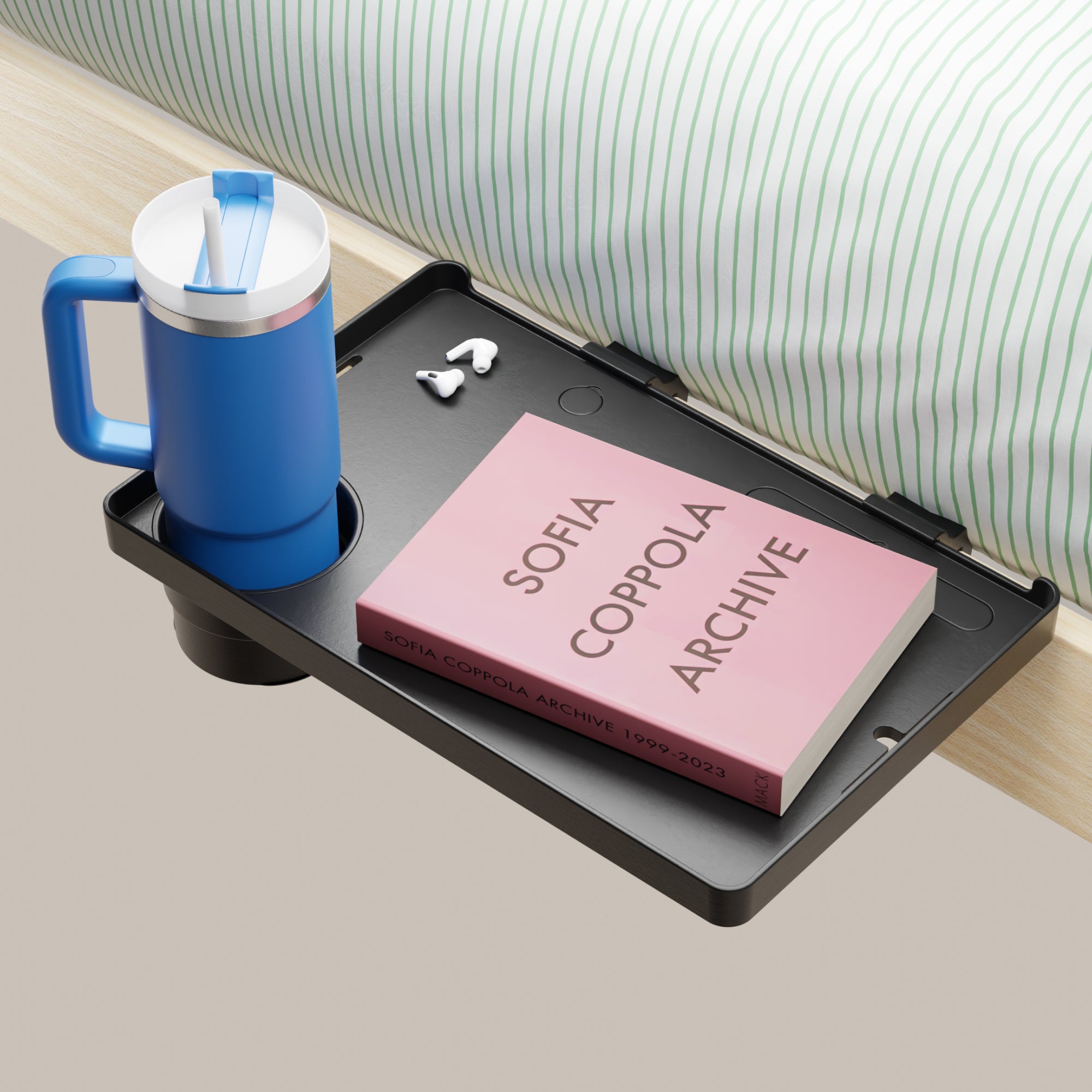
BedShelfie’s clamp-on shelf ↗ uses a compatible bed rail instead of legs or wall brackets. That releases floor space and avoids fixing into a wall, but it is not a universal fit for upholstered beds or every rail shape. Check the exact model’s clamp and slat clearances before ordering.
A simple wall shelf can offer more freedom in height and shape but needs suitable wall support. A small freestanding table is easier to move and may carry a drawer without special fixings. Compare the complete reach from the finished mattress, and ensure the door and bedding do not catch either option. More functions are only useful when the few nightly items remain easy to retrieve.
The linked products are examples of different approaches. Similar solutions can be found from other manufacturers and stores. Compare the exact model, supplied components and installation requirements. Product photographs are credited to their source. This article describes functions and planning considerations, rather than a hands-on test.