
A serving cart should reduce trips, not become a permanent obstruction holding fragile items. Its useful function depends on both the load and the route.
We compare a cart with removable trays, a simple hand-carried tray and fixed nearby storage, so wheels are chosen for a real reason.
A removable tray adds a second way to serve
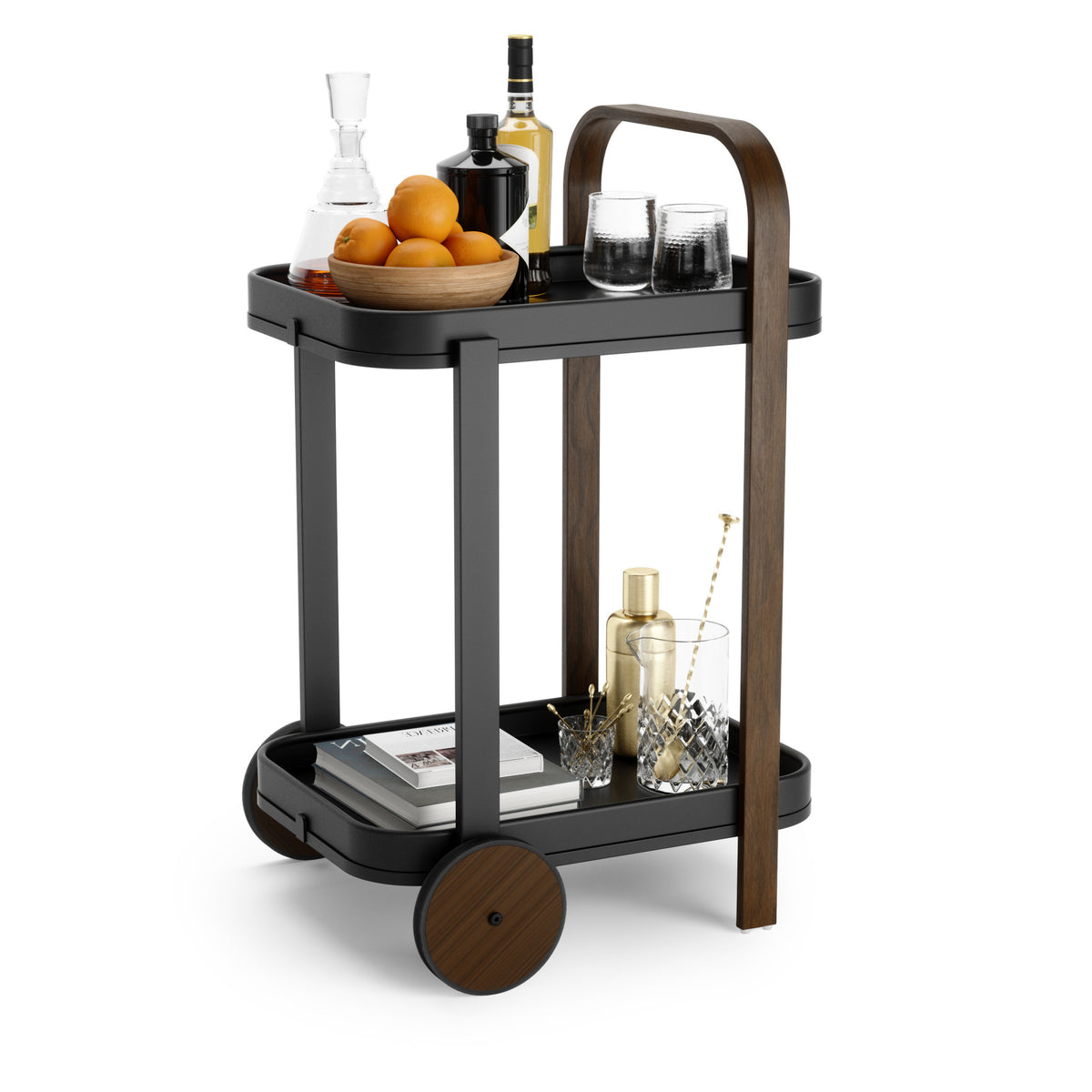
Umbra Bellwood Bar and Storage Cart ↗ has two levels and a removable upper tray. It illustrates the difference between rolling the whole group and lifting off a smaller serving group. Check the tray’s loaded weight and grip before planning to carry it across the room.
A plain tray is cheaper and takes less parking space when the route is short. A cart is more useful when items must move together and its wheels suit thresholds and flooring. Confirm the selected model’s capacity, assembly and any brake features rather than assuming all serving carts lock in place. Leave a real parking position outside the main passage.
Choose one main job
A cart for serving has different needs from a drinks display or a place for craft supplies. Start with the items carried together and their combined weight. Avoid turning a small trolley into a general overflow cabinet. A clear purpose makes it easier to return contents and keep the top available for use.
A route that wheels can manage
Measure narrow doorways and check rugs, thresholds and floor transitions. A cart should move without catching leads or colliding with chair legs. Keep loads stable and avoid heavy objects high above a light base. Brakes, where supplied, should be used as instructed; they do not make the cart suitable to lean or sit on.
Removable trays offer another approach
For a small collection, carrying a suitable tray from a cabinet may be simpler than moving a trolley. Check the loaded weight and grip. A tray with a stable base and appropriate edges can gather accessories while leaving the cabinet to carry the storage load. Keep hot items and liquids within the serving equipment’s intended use.
Give it a real parking place
A cart parked behind a dining chair may become inaccessible during meals. A position near the kitchen can work better if it does not obstruct appliance doors. Check the complete height beneath a counter, including handles and anything stored on top. Do not hide operating electrical equipment in a cart enclosure without the clearances it needs.
Compare the modest alternatives
A lower-cost shelf, a reusable tray or a cabinet drawer may solve the same task. On Amazon, compare wheel construction, shelf dimensions and stated load rather than promotional photos alone. A cart earns its floor area when it saves repeated trips. What would you put on it for an ordinary meal, rather than a special occasion?
The linked products are examples of different approaches. Similar solutions can be found from other manufacturers and stores. Compare the exact model, supplied components and installation requirements. Product photographs are credited to their source. This article describes functions and planning considerations, rather than a hands-on test.