
A compact home bar needs a clear place for preparing and setting down drinks as well as space for bottles. Filling the whole counter defeats that purpose.
We compare a modest removable group, a serving cart and a fitted working shelf, including where a more elaborate cabinet earns its cost.
Inventory what is actually used
Separate bottles, glasses, tools and occasional accessories. Count the glasses normally needed for a gathering, not every item accumulated over the years. Tall bottles and long tools establish minimum clearances. Keep a few rarely used pieces elsewhere if they would make daily access awkward.
Glassware needs handling space
Allow height for lifting a glass, not merely enough room for it to stand. Separate delicate rims from neighboring objects and avoid overcrowding. Hanging stemware requires a holder that matches the base and stem dimensions and is properly attached. It is not automatically suitable for every glass shape or cabinet shelf.
A clear preparation area
Leave a working surface for pouring and arranging the serving set. A removable tray can make cleanup easier and help contain small spills, but it does not replace a suitable surface finish. Protect nearby furniture according to its care instructions. Keep liquids away from power connections and avoid placing a serving area directly over operating media equipment.
Closed, open or mobile?
Closed storage can keep a shared dining room visually calmer and allow more controlled access. Open shelves make stock visible but require dusting and thoughtful placement. A cart changes location easily only if it has a suitable route and parking spot. Choose the arrangement for the household, including children, rather than for the largest possible bottle display.
Build in only when the routine is clear
Before commissioning a custom bar, try a dedicated cabinet zone for several weeks. Notice where glasses, waste and cleaning items need to go. A complex lift or concealed mechanism adds requirements for servicing and adjustment. This is a planning guide, not a claimed completed project. Which function would make the biggest difference: storage, preparation space or carrying drinks to the table?
Use movement only where it improves serving
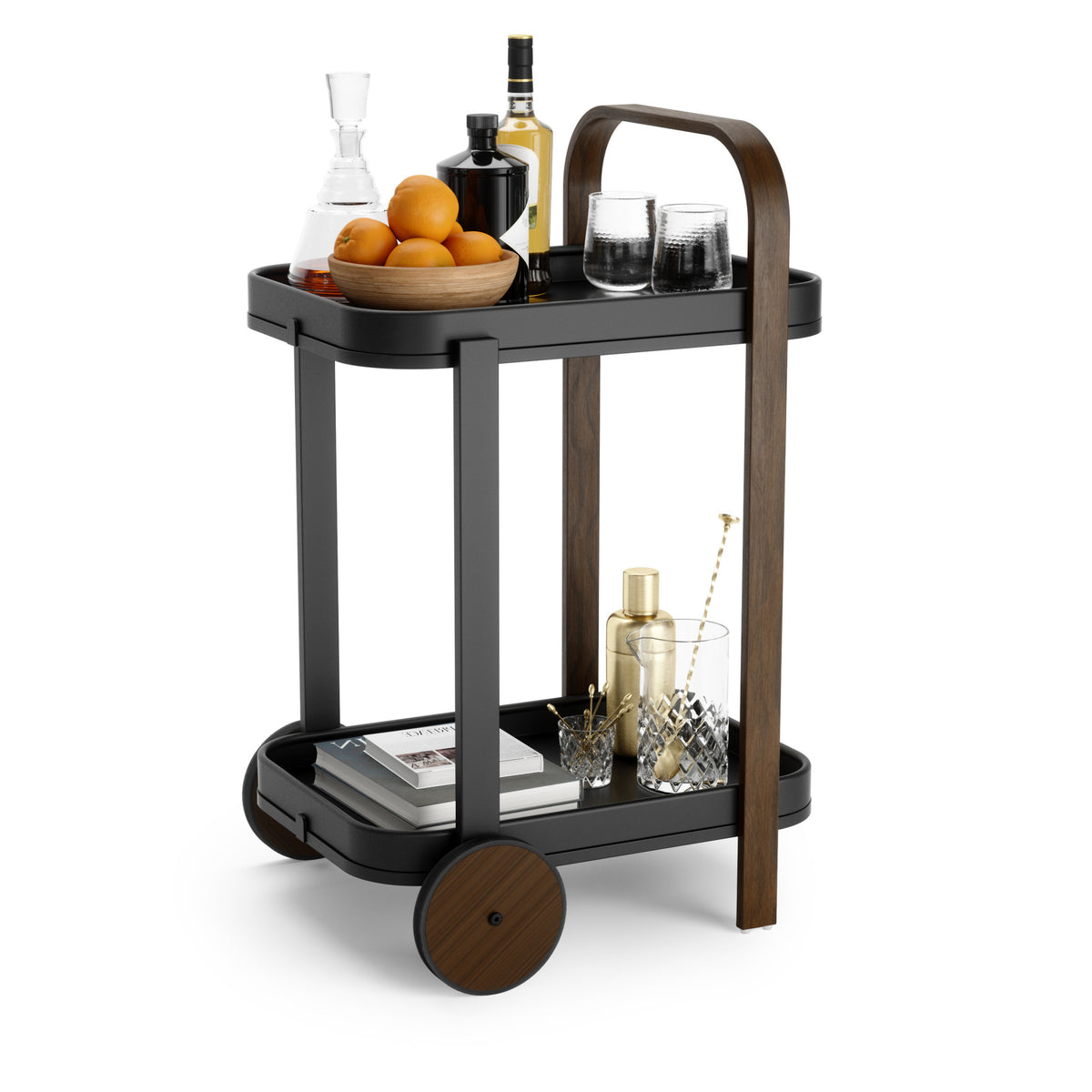
Umbra Bellwood’s removable upper tray ↗ can bring a limited set of tools and glasses to the serving location. It is a portable storage example rather than built-in bar cabinetry. Check how the group travels and where the cart stands while people are using the room.
For a fitted cabinet, a compatible Blum pull-out shelf lock ↗ illustrates holding an extended shelf for an intended working task. More hardware adds specification and installation cost, so compare it with a clear existing surface first. Keep bottle and glass support stable and leave enough room to lift a glass without contacting the shelf above.
The linked products are examples of different approaches. Similar solutions can be found from other manufacturers and stores. Compare the exact model, supplied components and installation requirements. Product photographs are credited to their source. This article describes functions and planning considerations, rather than a hands-on test.