
Connecting the kitchen and dining area is as much about the trip with a full plate as the view between the rooms. A matching finish cannot fix a blocked serving route.
This guide compares a clear landing area, a removable tray and movable serving storage before considering changes to furniture or walls.
Walk the serving route
Trace the journey from preparation surface to table with a full serving dish in mind. Check chair backs, corners and appliance doors along it. The shortest path is not useful if it crosses the main cooking position. Observe how another person enters or leaves while a meal is being prepared.
Seating changes the passage
A pushed-in chair occupies less space than one being used. Test the dining arrangement with people seated and another person passing. A bench may change how seats are accessed but does not remove the need for movement space. Do not select a smaller tabletop while ignoring projecting legs or the chair’s full depth.
Plan the return journey
After eating, dishes travel back toward washing and storage. Check whether the open dishwasher blocks the route to the tableware cabinet. A tray can reduce small trips if it remains manageable. Give food leftovers and waste clear destinations so clearing the table does not require crossing the kitchen several times.
Connect visually without forcing identical finishes
Related colors, repeated hardware or a shared material can give the areas coherence. Different work surfaces may still be appropriate for their tasks. Check how each finish handles heat, spills and cleaning rather than assuming a dining tabletop can be used like a kitchen worktop. Lighting can also define the dining zone without physical barriers.
Try changes before construction
Moving a table or changing a sideboard’s role may improve the connection without removing walls. Structural alterations and service changes require appropriate assessment; this guide does not establish whether a partition can be removed. Start with the daily route and the furniture already available. Which journey is currently most awkward: serving, sitting down or clearing up?
A temporary landing place can test the route
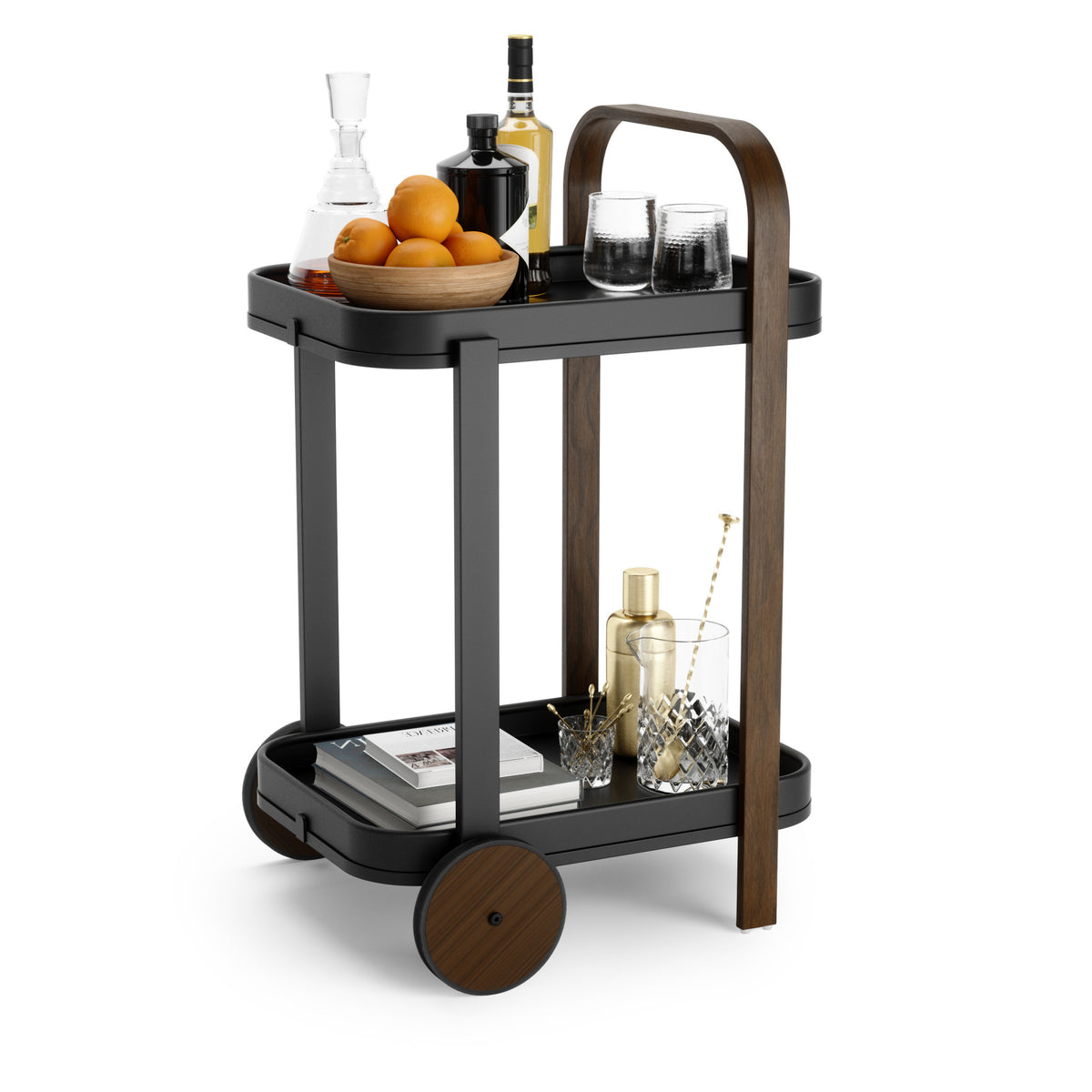
Umbra Bellwood’s serving cart ↗ illustrates moving a group while retaining a removable tray for the final step. It can help test where a serving position would be useful before committing to built-in furniture. Check the route with chairs occupied and doors open.
A wall-folding surface ↗ may provide an occasional landing place if its structure and finish suit the intended task. It adds projection when open and requires suitable wall support. Compare both with simply clearing part of an existing counter; use construction only when the serving and clearing routines still need improvement.
The linked products are examples of different approaches. Similar solutions can be found from other manufacturers and stores. Compare the exact model, supplied components and installation requirements. Product photographs are credited to their source. This article describes functions and planning considerations, rather than a hands-on test.