
Tableware storage should make setting and clearing the table easier. Deep stacks and crowded glass shelves can make an attractive sideboard awkward in everyday use.
We compare supported plate groups, small divided trays and ordinary shelves, with space to grasp each item and return clean pieces.
Daily settings deserve the best access
Keep the plates and glasses used most often within a comfortable range. Large occasional platters can live elsewhere. Check how the cabinet door opens beside the table and whether a seated person blocks the drawer. A dining room plan should include storage in use, not just the closed outline of the sideboard.
Glassware and serving pieces
Allow clearance above glass rims and around handles. A shelf height set for drinking glasses may not fit a tall pitcher. Vertical dividers can suit some trays and platters if the base and supports are appropriate. Keep fragile pieces from sliding into one another and avoid treating a decorative plate stand as secure transport equipment.
Linens and small accessories
Napkins, placemats and small serving tools can use shallow drawers or removable boxes. Store textiles clean and dry. Group a regularly used set so setting the table does not require opening every compartment. Rarely used decorations should not occupy the only drawer that comfortably holds daily cutlery.
Separate plates from small serving accessories

Kigley’s wooden pegboard organizer on Amazon ↗ illustrates movable boundaries around plates and bowls in a compatible drawer. Check loaded height, base size and care; the pegs do not increase the permitted drawer load. A plain shallow stack may be enough when it remains stable and easy to grasp.
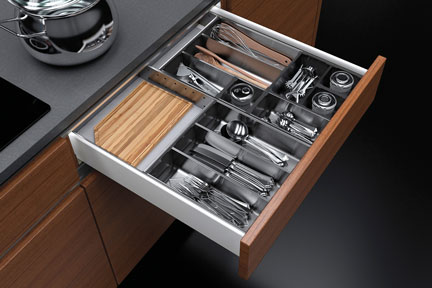
Richelieu Separado ↗ provides a more coordinated divided layout for cutlery and small accessories. Compare actual serving pieces with the compartment dimensions. A premium fitted interior earns its extra cost through useful fit and finish, rather than by filling every corner with the smallest compartments.
Choose closed storage selectively
Doors can protect the visual calm of the room, while an open shelf may suit a small attractive collection. Dust and easy cleaning matter with either approach. A lower-cost improvement may be changing shelf positions and adding a few suitable containers rather than replacing the sideboard. Check adjustable shelf support and anchoring requirements before loading it.
Set the table as a practical test
Prepare the usual number of places using the proposed arrangement. Notice unnecessary turns, heavy lifts and doors left open across the route. Put the items back after washing to check the reverse journey too. Which part of your tableware collection needs a better home: everyday dishes, glasses or the large pieces used only occasionally?
The linked products are examples of different approaches. Similar solutions can be found from other manufacturers and stores. Compare the exact model, supplied components and installation requirements. Product photographs are credited to their source. This article describes functions and planning considerations, rather than a hands-on test.