
Spice storage works when you can recognize and retrieve one jar without lifting three others. A neat row is less useful if its labels disappear behind the front row.
Here we compare angled drawer layouts, shelf steps, small turntables and under-shelf racks, including the fitting details that can make a compact solution unsuitable for a particular cabinet.
A turntable with removable compartments
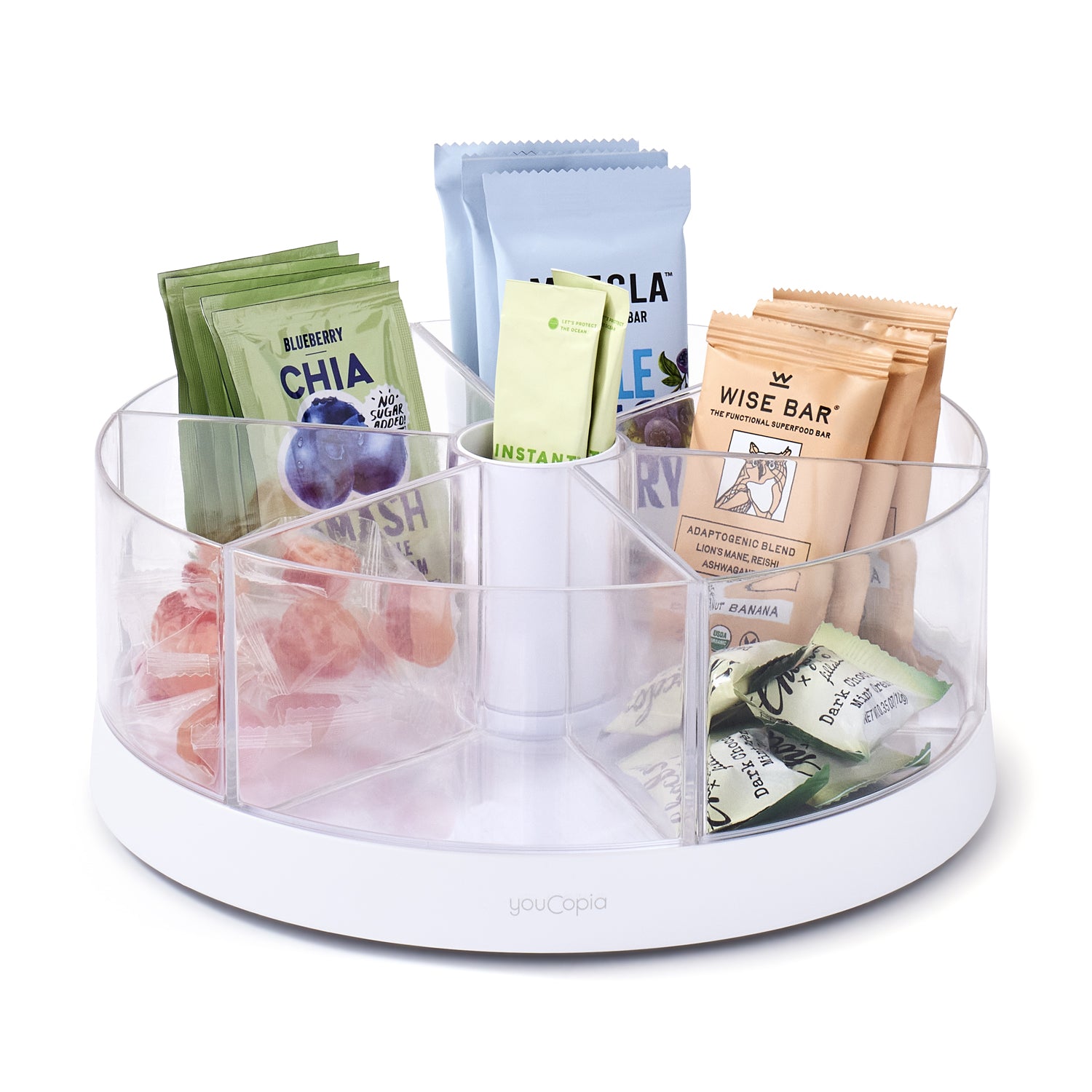
YouCopia SmoothSpin with six bins ↗ groups small items into removable compartments on a rotating base. It offers a different action from a stepped riser: turn the contents toward the opening, then lift out a bin if needed. It may suit packets and small jars, but check their dimensions rather than assuming every spice bottle fits the compartments.
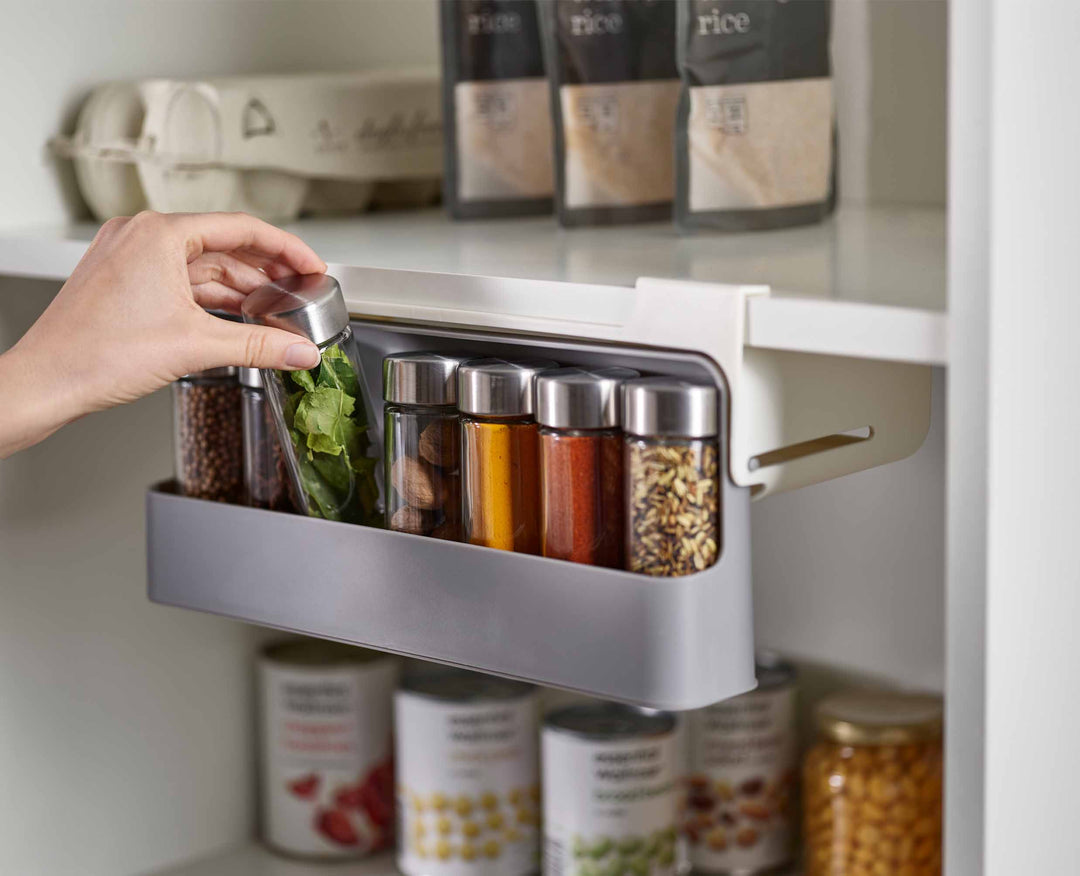
The circular footprint leaves unused space in a rectangular cabinet, and tall jars can still obstruct removal. Compare this with a shallow drawer insert or a plain removable tray before adding moving parts. The under-shelf Joseph Joseph rack illustrated earlier uses a different mounting method and preserves the shelf surface at the cost of some height below it.
Choose the location before matching the jars
Spices become difficult to use when you cannot identify what is behind the first row. A good organizer makes names readable and allows one jar to come out without moving several others. Start with the location that fits your cooking routine, then choose the arrangement inside it.
Count the jars and packets you actually use. Separate duplicate refills from the everyday selection and check their labels. You do not need to transfer everything into matching containers to improve access. Consistent labels and a sensible limit on the daily collection can make a mixed group much easier to manage.
A drawer turns the collection into a visible layout
An angled insert can present labels toward you when a drawer opens. Check the complete height of the loaded insert, not just the organizer itself. A jar cap may catch the cabinet opening even though the empty tray slides in easily.
Upright jars are another option in a sufficiently deep drawer. Labels on their tops make them easier to identify from above. Use dividers or an appropriate non-slip arrangement to prevent excessive movement, and keep packets in their own small compartment rather than hiding them under the jars.
Shelves need a way to reveal the back row
A stepped riser raises rear jars so their labels are easier to see. It also reduces the vertical space above them. Measure the tallest jar on the highest step and leave room for your hand. A shelf that accommodates the display but makes removal awkward has not solved the access problem.
A removable bin groups a small selection and brings it out of a deeper cabinet. A rotating organizer can help in a suitable opening, but compare its usable area with the shelf space it consumes. Check that tall containers remain stable during movement and that the door does not obstruct the turn.
Under-shelf storage can use an overlooked gap
The Joseph Joseph CupboardStore rack pictured here adds a pull-out spice compartment below a shelf. The selected model is described for up to seven standard spice jars and uses adhesive mounting. Its stated maximum shelf thickness is 2 cm; jar fit and installation conditions still need checking for your cabinet.
Read the current mounting instructions before attaching it. Check the shelf surface, door clearance, required access and the space occupied by items on the shelf below. Adhesive mounting is a product-specific installation method, not a guarantee that every finish or location is suitable.
Keep the system easy to restock
Arrange spices alphabetically or by the way you cook, but use one approach consistently. Keep refills separate and label them clearly so a new packet does not disappear behind an older jar. When you decant a product, retain the useful information from its original label.
For an inexpensive first step, group the daily jars in a shallow existing tray and make the names readable from the direction you approach. Measure before buying inserts, and leave a little room for change. A compact selection you can identify quickly is more useful than a tightly packed display that is difficult to put back.
Product reference
Joseph Joseph product page. Check current dimensions, compatibility and care or installation instructions for the selected model.
The linked products are examples of different approaches. Similar solutions can be found from other manufacturers and stores. Compare the exact model, supplied components and installation requirements. Product photographs are credited to their source. This article describes functions and planning considerations, rather than a hands-on test.