
Wood grain, upholstery and fabric influence touch and maintenance as much as appearance. Two pieces in the same color may age and clean quite differently.
This guide compares surface descriptions and construction details, using product examples to make the difference between a decorative finish and an underlying material clearer.
Compare materials where they will be used
A bedroom finish is experienced close up: a hand on a headboard, fabric against bedding and a drawer front under a bedside light. Place samples together in the room before deciding. Look at them in daylight and at night, including the light you actually use beside the bed.
Keep the palette manageable. A few related materials can provide variation without making every piece compete. Matching a photograph on a screen is less reliable than comparing the physical finish and texture.
Read wood descriptions carefully
Solid wood, real-wood veneer and printed wood effects describe different constructions. Veneer is a thin layer of real wood over a supporting material; its care and repair possibilities depend on the product. A wood-like decorative surface may offer a consistent pattern without being solid timber.
Ask about the complete construction, edge finish and care instructions. Do not assume that all wood surfaces can be sanded or refinished. Thin veneers and manufactured coatings need product-specific treatment.
Read what the visible layer actually is
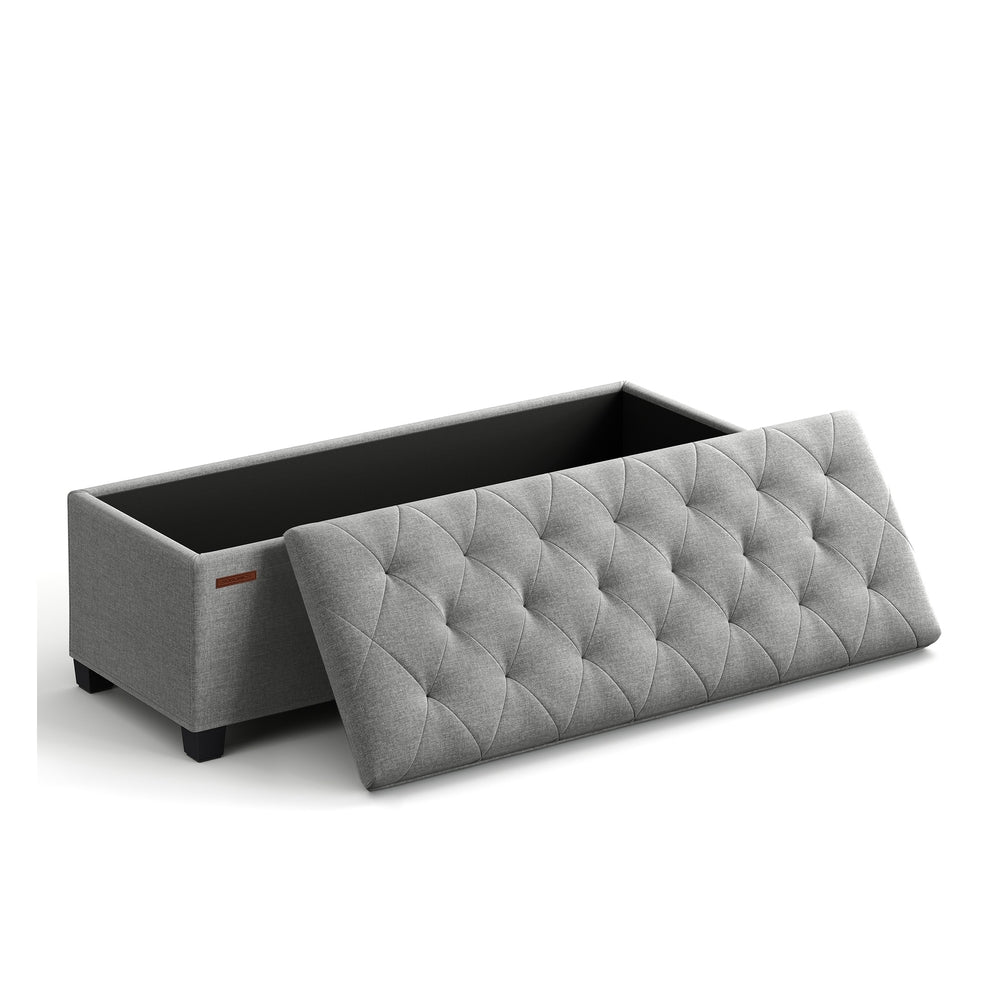
SONGMICS’ linen-look storage ottoman ↗ illustrates why wording matters: “linen-look” describes an appearance, not a claim that the cover is pure linen. Check the actual upholstery composition, core, cleaning instructions and whether a replacement cover is supplied or available.
Similarly, EGGER’s decorative surfaces ↗ include woodgrain reproductions. A convincing wood pattern does not turn a board into solid timber or establish its repair method. Premium fabric or a natural veneer may offer a preferred feel or appearance, while a decorative board can be practical for another application. Compare samples, edge details and care before deciding what the additional cost buys.
Choose upholstery around contact and cleaning
Texture, weave and color influence how marks and wear appear. Request the available performance information and care label for the precise fabric. A broad description such as easy-care does not explain every stain or cleaning method.
Make replacement part of the choice
Keep the fabric code, finish reference and purchase documents. Ask whether a cover or individual front can be replaced later. An attractive coordinated scheme is easier to maintain when its parts remain identifiable.
Avoid buying every surface from a tiny sample alone. Where possible, inspect a larger panel or a finished piece. Choose finishes that suit the household’s maintenance habits and feel comfortable in the bedroom, rather than following a palette that is difficult to live with.
The linked products are examples of different approaches. Similar solutions can be found from other manufacturers and stores. Compare the exact model, supplied components and installation requirements. Product photographs are credited to their source. This article describes functions and planning considerations, rather than a hands-on test.