
Tools are easier to return when the wall arrangement follows a task. A dense display of hooks can look organized while making the tool behind another one hard to remove.
Here we compare individual holders, peg-style arrangements and compatible rail systems, with fixing and loaded projection part of the plan.
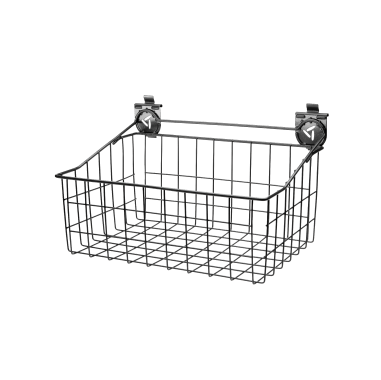
Group tools by the task
Wall storage works when it puts a useful group within reach. Lay out the tools used for one activity and decide what belongs above the bench, near the door or in a closed cupboard. Keep frequently used items accessible without reaching across a machine or fragile project.
Trace the actual tool shapes before buying a panel. A hammer, charger and long-handled tool occupy more room than their hanging points suggest. Leave enough clearance to remove them without knocking neighboring items.
Panels and rails are complete systems
Pegboards and slatwall rails use different accessories and fixing arrangements. Confirm that hooks and baskets are compatible with the selected panel. Similar-looking slots do not establish a safe fit. Check the complete installed system’s limits rather than adding together unrelated hook ratings.
Fix to the structure, not just the finish
The wall surface may conceal masonry, timber framing, services or a lining with limited fixing capacity. Choose the mounting method specified for the actual structure. Seek a suitable installer where the wall construction is uncertain.
Arrange sharp, heavy or powered tools in storage appropriate to them, with blades, batteries and chargers handled as their makers instruct. A tidy open display is not the right destination for every tool, particularly where children can reach it.
Keep room for change
Leave a few unused positions so the layout can evolve. Label small baskets and avoid creating a hook arrangement that only works when every tool is returned in a precise order. Keep replacement accessories identifiable.
For a low-cost start, mount a small compatible panel or rail rather than covering the entire wall. Test a normal project and the cleanup afterward. Expand the system only where it makes tools easier to find and return.
Buy the rail and holder as a compatible system
Gladiator GearTrack and GearWall ↗ organize tools through channels or panels and matching accessories. The advantage is repositioning compatible hooks and baskets as the collection changes. The tradeoff is committing to a system rather than using independent holders where each one is needed.
Start with one group, such as garden hand tools or frequently used workshop tools. Compare the full movement of removing the largest item and check the supporting wall and model-specific rating. A few suitable individual hooks may cost less and use less wall coverage. A coordinated premium installation earns its cost when future changes and appearance matter as well as the first layout.
The linked products are examples of different approaches. Similar solutions can be found from other manufacturers and stores. Compare the exact model, supplied components and installation requirements. Product photographs are credited to their source. This article describes functions and planning considerations, rather than a hands-on test.