
Small-parts storage should make a screw identifiable before the project starts. A large cabinet full of mixed containers can hide as much as it holds.
We compare shallow drawers, portable compartment boxes and larger tool storage, so each size of item has a suitable home.
Separate usable stock from miscellaneous leftovers
Start by sorting fasteners and fittings into identifiable groups. Keep product information where it matters and do not mix parts that look similar but serve different applications. An unlabeled drawer of assorted hardware can waste more time than it saves.
Keep the quantities you are likely to use. A small active collection near the bench can be separate from less frequent supplies. Give returns a simple destination so new packets do not collect on every flat surface.
Use compartments around the parts
Shallow drawers suit small pieces that need to be seen from above. Removable bins can be carried to a task and returned. Check the pictured small-parts cabinet’s intended contents and mounting rather than treating every divided organizer as interchangeable. Select materials and construction for the actual contents.
Check compartment depth, drawer clearance and the space needed for fingers. Tiny divisions can look efficient but make parts difficult to retrieve. Keep heavy hardware in a suitable support and do not apply a clothing organizer’s capacity to metal parts.
Label from the direction you approach
Put clear labels on the drawer fronts or bin faces that remain visible. Use a consistent naming method, such as the item type and relevant size, rather than inventing a different system for each drawer. Leave room to update labels.
Keep sealed products in their original containers and follow their storage instructions. Adhesives, finishes and chemicals do not belong in an unlabeled general-parts bin. Choose secure or specialized storage when the product requires it.
Small drawers and large tool drawers solve different problems
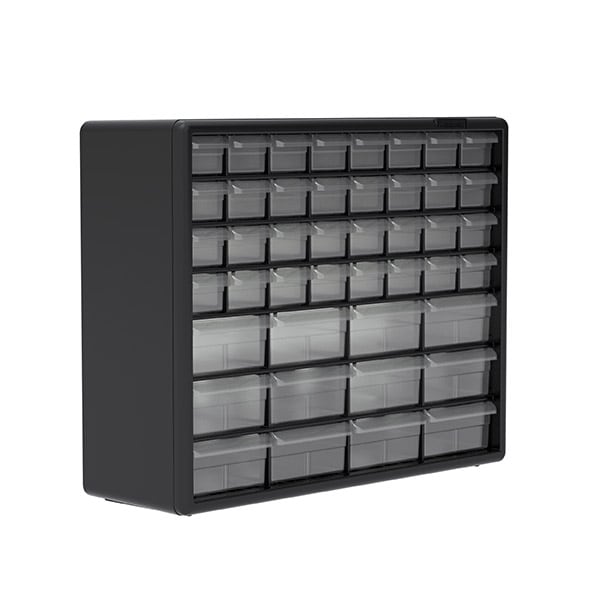
Akro-Mils 10144 ↗ has clear drawers and provision for dividers, making it a specific example for small hardware and craft supplies. Check the drawer sizes against the actual parts and obtain extra dividers where needed; do not assume every drawer arrives fully subdivided.
A portable compartment case is convenient when a small group travels to the task. Larger tools belong in a different arrangement, such as the Husky mobile drawer cabinet ↗. Paying for a full tool cabinet will not resolve a mixed pile of small fittings by itself. Label the front from normal viewing height and keep uncertain parts separate from known usable stock.
Choose cabinets for access and maintenance
Closed storage can reduce visual clutter, while transparent bins make stock easier to inspect. Consider dust, cleaning and whether doors obstruct the bench when open. Follow the cabinet’s assembly and anti-tip requirements.
Trial a few labeled boxes before buying a large drawer cabinet. Use them during an actual repair and the cleanup afterward. Expand only when the categories remain clear and the storage makes finding and returning parts easier.
The linked products are examples of different approaches. Similar solutions can be found from other manufacturers and stores. Compare the exact model, supplied components and installation requirements. Product photographs are credited to their source. This article describes functions and planning considerations, rather than a hands-on test.