
A hobby area works when a project can start, pause and be cleared without losing parts. A large bench alone does not provide that routine.
We compare a clear work surface, small-parts drawers and task-based wall storage, keeping the equipment and room conditions matched to the activity.
Keep small parts beside the task, not mixed in tool drawers

Akro-Mils 10144 ↗ illustrates shallow clear drawers for hardware and craft parts. Compare the individual compartment dimensions with your materials and use dividers where the grouping needs them. A small cabinet near the task can be more useful than a large mixed reserve elsewhere.
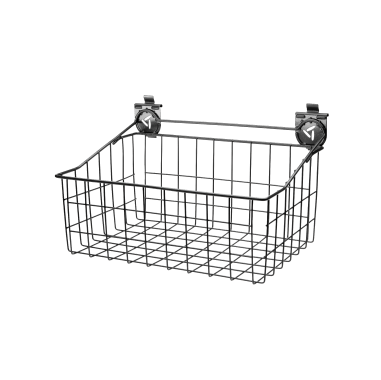
Gladiator wall accessories ↗ can group compatible hand tools, while a Husky mobile workbench ↗ adds larger drawers and a movable top. These do not establish that the basement suits dust-producing work, finishes or powered equipment. Choose the activity and its requirements first, then specify furniture that keeps the project and cleanup routes clear.
Choose the activity before the furniture
Model building, sewing and woodworking do not need the same room conditions or equipment. Define the main activity, the largest project and the time spent there before arranging benches. A spare basement corner is not automatically suitable for every hobby.
Check building conditions, access and the requirements of any tools or materials. Activities producing dust, fumes or significant noise need their own appropriate arrangements. Storage furniture cannot provide those systems by itself.
Keep a clear project zone
Measure the working position with the chair or standing user in place. Include the space to move materials and reach controls. A bench that fits between shelves can still leave too little room to handle an ordinary project.
The small-parts cabinet illustrates organization, not suitability of the room or work surface for a particular machine or process. Verify the intended use, load and stability of the selected bench.
Give unfinished work a destination
A separate shelf or project tray can prevent unfinished work from occupying the main bench indefinitely. Keep small parts identified and fragile projects protected according to their needs. Avoid a storage arrangement that must be dismantled before each session.
Put tools near the task but store sharp, powered and chemical products as their instructions require. Do not mix workshop supplies into a food or laundry storage zone simply because the same shelving run is convenient.
Plan service and cleanup access
Keep utility equipment, shutoffs and inspection routes clear. Coordinate required power, ventilation or other services with the relevant qualified installer. Do not enclose a basement service area as part of the furniture project without confirming the requirements.
Trial the layout during a real hobby session and its cleanup. Start with a suitable clear surface and a few useful storage groups, then expand where a specific access problem remains.
The linked products are examples of different approaches. Similar solutions can be found from other manufacturers and stores. Compare the exact model, supplied components and installation requirements. Product photographs are credited to their source. This article describes functions and planning considerations, rather than a hands-on test.