
Keep food visible and easy to rotate only where the room meets the products’ storage requirements.
Confirm that the location suits food
A basement is not automatically a pantry. Check the room’s conditions, cleanliness and the storage instructions on the food. Keep products that require refrigeration or other controlled conditions in the appropriate place rather than relying on a room feeling cool.
Separate food storage from chemicals, workshop materials and other incompatible supplies. The pantry should remain easy to inspect and clean. Resolve water entry or moisture problems before filling shelves.
Build around real packaging
Measure the packages you routinely buy and choose shelf spacing around them. Keep heavy containers at a manageable height and allow enough room to remove a package without dragging neighboring items forward.
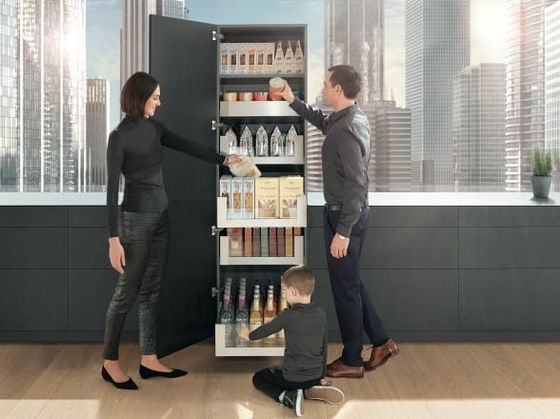
Blum’s pantry illustration demonstrates accessible internal drawers in furniture, not a basement installation. Fixed shelves or removable bins can be a simpler approach. Select furniture and hardware for the actual conditions and loads.
Keep rotation visible
Group by the way food is used and leave a clear refill zone. Keep older supplies visible and check package dates and conditions when restocking. Do not hide a partly used product behind a new oversized pack.
If decanting, retain useful identification, dates and preparation information from the original package. Use containers intended for the contents and care routine. Matching jars are optional; reliable labels and visibility are more important.
Do not turn storage planning into preservation advice
This guide covers organization of suitable packaged supplies. It does not provide instructions for canning, preserving or determining whether damaged food is safe. Use the relevant food-safety guidance for those questions.
Trial a small shelf arrangement through a grocery cycle before expanding it. Leave cleaning access and some spare capacity. A useful basement pantry is a controlled, understandable storage zone rather than a place to accumulate food without a rotation plan.