
A bedroom needs enough light to find a book or walk safely without turning every nighttime movement into a bright-room event. One ceiling fitting rarely serves all those tasks comfortably.
We compare local reading light, an accessible bedside control and gentle route lighting, starting with simple changes before integrated furniture lighting.
Keep general and task lighting separate
General light helps with dressing, cleaning and finding things. Reading light needs to illuminate a smaller area near the bed. Independent control makes it possible to read without lighting the whole room. Before adding fittings, try the existing lamps in different positions and identify which task remains difficult; more light in the wrong place will not solve it.
Place the switch where it will be used
A lamp that requires getting out of bed to turn off can undermine an otherwise convenient setup. Check switch position, cable length and access with normal bedding in place. If choosing smart controls, retain an understandable way for guests or household members to operate the light. A feature is useful only if people can reliably use it at night.
Create a gentle route
A low-level light can help reveal the path toward the door without using full room lighting. Position it so it identifies the floor and obstacles rather than shining into the sleeper’s eyes. Keep the route free of cables and furniture. Use fittings and power supplies appropriate to their installation; a strip tucked into bedding is not a substitute for a correctly installed light.
A clip-on reading light can test the position
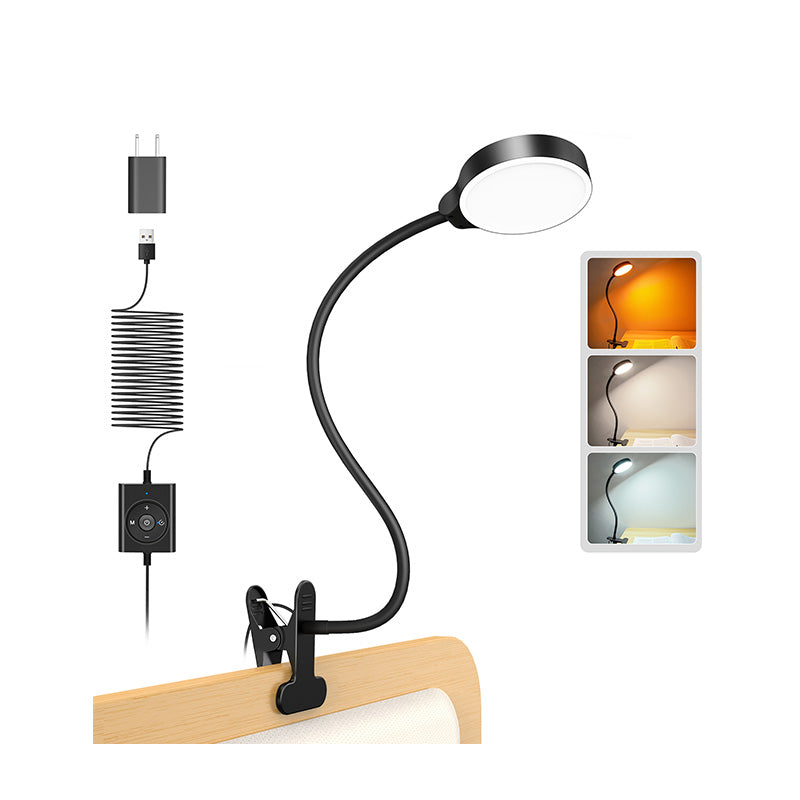
Glocusent’s LED headboard clip-on light ↗ illustrates a lamp whose position can be adjusted independently of a bedside table. Check the clamp opening and grip surface as well as the beam direction. A flexible lamp is useful only if it remains stable and the switch is reachable from the resting position.
This is a modest way to test where a built-in reading light should go. A specialist furniture-lighting system can hide cables and coordinate controls, but requires a matched supply and a service route. Compare the actual beam on a page and glare seen by a second person; color-temperature labels alone do not tell you how comfortable the arrangement will feel.
Check bulbs, dimming and shades together
Socket type, maximum permitted lamp load and dimmer compatibility depend on the fixture. A dimmable bulb does not guarantee compatibility with every controller. Consider color appearance and glare in the actual room instead of buying solely by a brightness number. For a simple improvement, a correctly selected shade or a better-positioned lamp may be enough.
Try the room after dark
Check reading, dressing and walking to the door under evening conditions. Window daylight can hide shortcomings during a daytime showroom visit. Keep lighting claims practical rather than treating a particular color temperature as a medical solution. Which task is least comfortable in your bedroom now: reading, dressing or moving around without waking someone?
The linked products are examples of different approaches. Similar solutions can be found from other manufacturers and stores. Compare the exact model, supplied components and installation requirements. Product photographs are credited to their source. This article describes functions and planning considerations, rather than a hands-on test.