
A countertop can look right in a sample and become frustrating around the sink, at a joint or when a hot pan needs a landing place. Those details deserve as much attention as the pattern.
This guide compares decorative surfaces and solid materials through their construction, care and complete installation, so appearance is only one part of the decision.
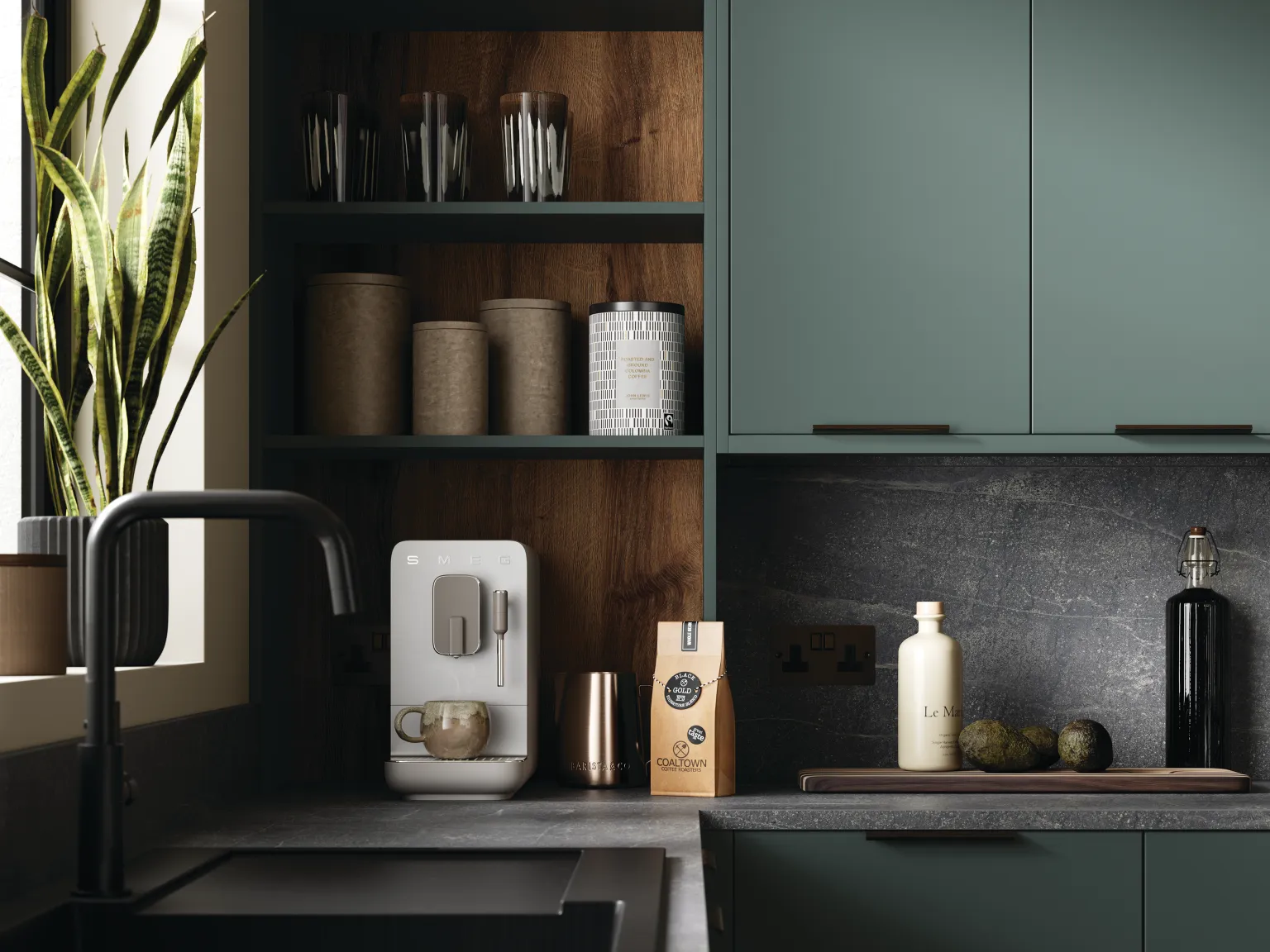
Start with the work the surface must do
A countertop choice affects cleaning, preparation and the way the kitchen ages. Begin with the tasks it will see: frequent baking, hot cookware moving from an oven, wet work around the sink or occasional dining. Then compare the exact product’s care and installation instructions. A material family alone does not tell you every performance limit.
Take physical samples home and view them in daylight and under the planned task lighting. Gloss, texture and strong pattern can look very different across a full counter. Check how crumbs, fingerprints and water marks appear rather than judging only the color.
Separate the surface from the structure
Laminate worktops combine a decorative surface with a supporting construction. The edge profile, core, joints and cutouts matter as well as the face. EGGER’s kitchen materials provide examples of coordinated decors; a matching appearance does not mean that a furniture panel and a worktop have identical performance.
Solid wood, stone, engineered surfaces and compact laminates bring different installation and care requirements. Compare specific technical sheets. Do not assume that a thin-looking product can span an unsupported opening or that a stone-like pattern behaves like natural stone.
Plan the vulnerable details
Identify the sink cutout, tap holes, joints, end panels and appliance openings on the drawing. Ask how each detail is supported and protected. Even a durable face can be let down by an unsuitable joint or an exposed cut edge.
Use heat protection and cutting boards in line with the maker’s guidance. Claims such as stain resistance or moisture resistance have product-specific conditions. Keep the care instructions with the kitchen documents so the surface can be cleaned with suitable products after installation.
Compare the complete installed choice
Include fabrication, edge work, upstands, transport, support and future access in the comparison. A low headline price may omit the details that make the surface workable. Ask what can be repaired and how a damaged section would be replaced.
Before ordering, confirm the final site measurements and the selected appliance and sink models. A thoughtful countertop is one whose appearance, maintenance and construction all fit the household, rather than one chosen solely from a small showroom sample.
Compare actual material families side by side
Wilsonart’s countertop range ↗ provides examples across laminate, quartz and solid surface. This makes a useful comparison exercise: ask for a particular product from each family, then compare its joints, edge details, heat precautions and repair options. Different materials from the same supplier are not interchangeable specifications.
EGGER’s coordinated decorative materials illustrate another issue: a matching cabinet panel and worktop may share a decor while having different cores and intended applications. Confirm that the exact selected product is a worktop suitable for your project. Compare fabrication, cutouts and edge work in the quotation; a material-only price cannot establish which installed option is cheaper.
The linked products are examples of different approaches. Similar solutions can be found from other manufacturers and stores. Compare the exact model, supplied components and installation requirements. Product photographs are credited to their source. This article describes functions and planning considerations, rather than a hands-on test.