
Closet lighting should help you find and compare clothes. Start by looking at the shadows inside a loaded wardrobe, then choose the fitting and control that make the light useful when the doors are open.
Put the light where the clothes do not block it
A light at the back of a deep shelf can be hidden by its contents. A fitting near the front may give a better view of the clothes, but it also needs shielding or positioning that avoids glare. Try the proposed position before committing to holes or a continuous channel.
A single light at the top will not illuminate every lower compartment through solid shelves. Decide which areas need their own light and which already receive enough from the room. A targeted arrangement can be more useful than making every edge glow.
Door sensors suit a predictable routine
A door-operated light can remove the extra step of finding a switch. It needs a sensor arrangement that suits the actual doors and their closing positions. Hinged doors, sliding doors and an open wardrobe do not present the same conditions, so check the intended operating mode for the selected fitting.
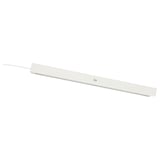
IKEA ÖVERSIDAN is a wardrobe-lighting example with a built-in sensor and mounting options for PAX. The selected listing calls for a compatible TRÅDFRI LED driver and ANSLUTA power cord, sold separately. Check the current component requirements for your region rather than treating the light strip as a complete mains-powered kit.
Manual controls and battery lights have a place
A manual switch or compatible remote can suit an open dressing area or someone who wants light before opening individual bays. It is another item to locate and operate, so decide where it lives as part of the plan. Smart control is worthwhile when it supports the routine, not simply because it is available.
A removable rechargeable light can be a modest retrofit where running a cable is inconvenient. Before choosing one, check how it mounts, how it detects movement and how easily it can be removed for charging. Battery operation avoids a cable to the light, but adds a maintenance task and may not give the coverage needed across a large wardrobe.
Keep the power supply accessible
Plan the driver, connections and cable route before filling the cabinet. Follow the selected system’s electrical and mounting instructions, including the permitted total load and any requirements for ventilation or clearance. Do not mix connectors or power supplies merely because they appear to fit.
Make it possible to reach the driver or replace a fitting without dismantling the wardrobe. Check the light with doors both open and closed, and with typical clothes in place. Compare the appearance of several fabrics under it and in the room’s usual light before deciding that the brightest option is the best one.
Before you buy
- Light coverage with the wardrobe loaded
- Sensor behaviour with the actual doors
- Compatible driver, cord and controls
- Accessible connections and a practical maintenance routine
Sources and product notes
Product information reviewed on October 17, 2026. Original product information and photo source ↗. Product availability, components and specifications can change. Layout comparisons are editorial guidance, not a report of a hands-on product test.