
A dresser can hold plenty of clothing and still make getting dressed frustrating. Small items disappear beneath larger ones, and a tightly packed drawer demands rearranging after every wash. The useful question is whether you can see, remove and return an item without disturbing everything around it.
Sort by use before choosing dividers
Start with the clothes that actually belong in the dresser. Separate daily underwear, sleepwear, exercise clothing and occasional pieces. Give the easiest drawers to the things used most often; the arrangement need not follow a rule about which category always goes at the top. Remove clothing waiting for repair rather than letting it occupy active storage indefinitely.
Removable boxes for small pieces
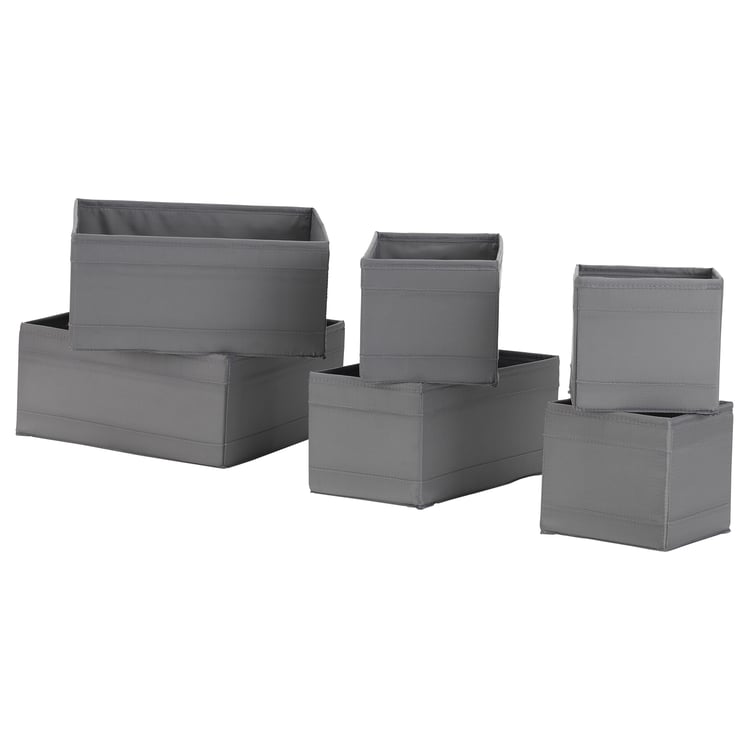
IKEA SKUBB boxes illustrate a simple approach to separating socks, underwear and accessories. Different box sizes create groups that can be lifted out together. Measure the drawer’s internal dimensions and opening height, including any narrowing caused by sloping sides. Leave room to grip a box. A perfect floor-space fit can still be awkward if the rim catches above it.
Rows, stacks or a mixture?
Upright rows make individual folded garments easier to identify, while low stacks can work for pieces that do not stand neatly. Choose the method that suits the fabric and your routine. Avoid packing rows so tightly that returning one item requires compressing all the others. Keep delicate or structured clothing in a form appropriate to it, rather than forcing everything into identical rectangles.
Dividers that stay useful
Adjustable dividers offer a different option from separate boxes. Check their contact with the drawer sides and the pressure they apply; a spring-loaded part should not distort thin panels. Lower-cost fabric compartments sold on Amazon can suit light items, but check cell size, rigidity and cleaning instructions. A large advertised compartment count is of little benefit if your clothes do not fit.
Check the dresser as well as the insert
Drawer contents and organizers add to the load on the furniture. Follow the dresser’s load limits, anchoring requirements and opening restrictions; never bypass a safety interlock to make several drawers open together. Keep the top usable instead of turning it into a permanent overflow shelf. After laundry day, check whether the layout still works with the full normal wardrobe, not just an almost-empty drawer.
A small trial before a full set
Organize one frequently used drawer first. Try the arrangement for several ordinary days, including putting clean clothing away. If one box keeps overflowing, resize that category instead of buying matching boxes for every drawer. Which part of your dresser needs the most attention: small items, folded clothes or the pile that never gets put away?
Sources and product information
Product information checked October 17, 2026. Check current documentation for the exact model, permitted installation, loads and compatibility. Product photos illustrate the named item; other arrangements discussed may require different products. Prices and availability vary by market.