
An entrance mirror should show the view you need before leaving, while lighting makes the person visible. A bright reflection of the ceiling is not enough.
We compare a wall mirror, a leaning arrangement and separate lighting, checking door movement and the usable reflection before choosing size.
Choose the reflection independently of the light
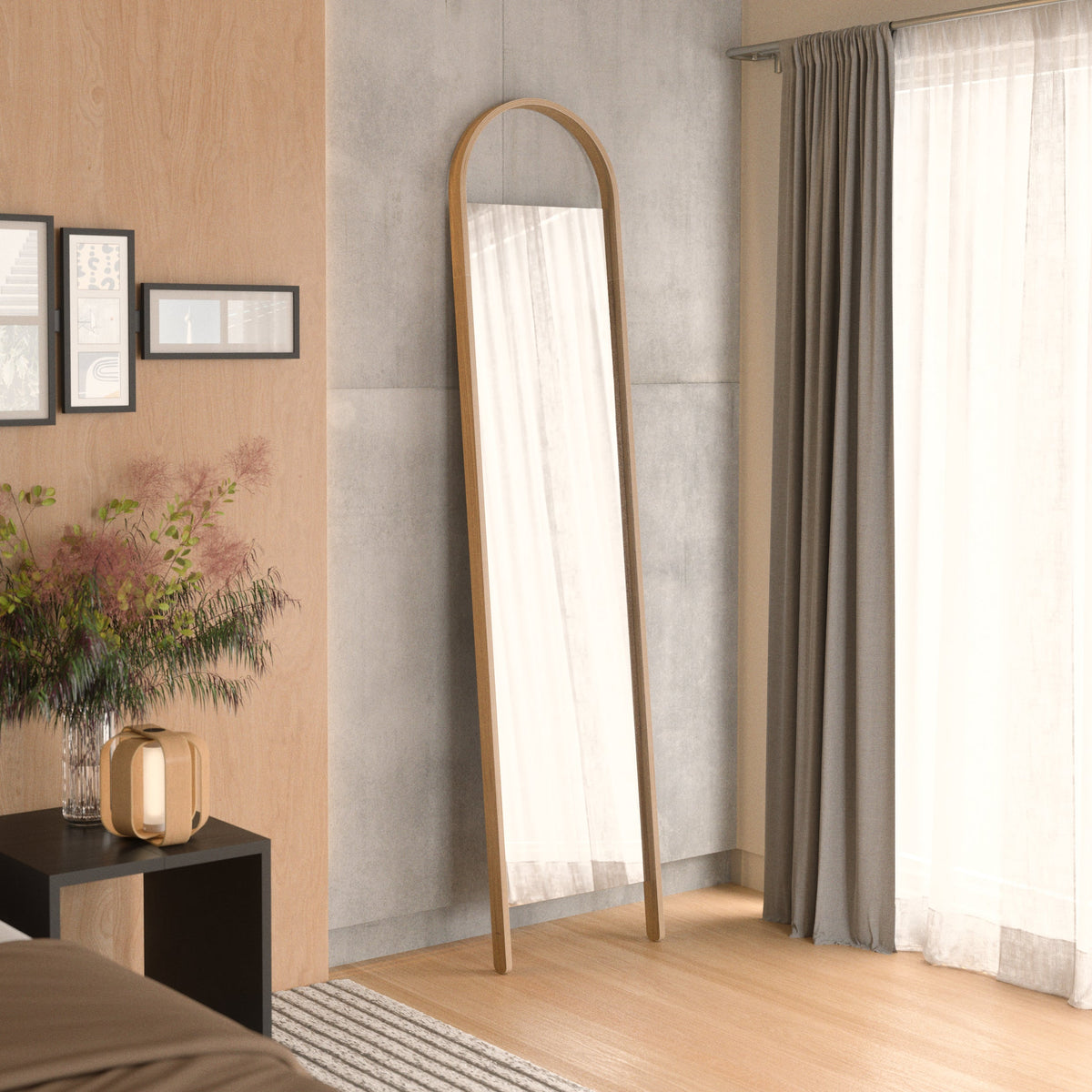
Umbra’s mirror collection ↗ includes wall-mounted and leaning designs, including the Bellwood example pictured. A leaning appearance does not remove the need to follow the selected product’s restraint instructions. Test the reflection from the actual standing position and include the frame’s footprint.
A plain wall mirror can be the simpler choice when the hallway floor must stay clear. Separate light placed for the face can be more useful than adding decorative backlighting alone. Compare the complete arrangement after dark and with the door open. Decorative size and premium framing only earn their cost if the view and movement work first.
Check doors and movement
Open the entrance and nearby cupboard doors completely. Handles, coat sleeves and carried bags should not strike the mirror. A position beside the shoe bench may be convenient, but check whether sitting or standing there blocks someone else. Keep glass out of an avoidable impact point in a narrow passage.
Light the person as well as the space
General overhead light can leave facial shadows. A separate suitably positioned light may make the reflection easier to use. Check it after dark and from more than one height. Avoid placing a bright source where it reflects directly into the viewer’s eyes. Adjustable lighting is useful only if its full movement remains clear of coats and doors.
A mirror does not create physical width
Reflection can change the visual impression, but it does not compensate for a deep console blocking the hallway. Choose furniture depth for the available passage first. A smaller shelf below the mirror may hold essentials without occupying as much floor area. Keep the mirror’s purpose clear rather than surrounding it with items that make it awkward to approach.
Mount and power appropriately
Select attachments for the wall structure, mirror weight and manufacturer’s instructions. Cable routing and power for nearby lighting should remain accessible and protected from moving doors. In a rental, compare a permitted mounting solution with a stable freestanding mirror explicitly designed for that use; do not assume removable adhesive strips suit heavy glass.
Do the leaving-home test
Put on shoes and a coat, collect your bag and make a final check in the mirror. If you must stand in the door swing or move a chair, adjust the layout. A functional entry can be created with a simple mirror and a well-positioned existing lamp. Is your current mirror easy to use, or merely in a place where it fits?
The linked products are examples of different approaches. Similar solutions can be found from other manufacturers and stores. Compare the exact model, supplied components and installation requirements. Product photographs are credited to their source. This article describes functions and planning considerations, rather than a hands-on test.