
Finding a container is easy; finding its matching lid can take longer than packing lunch. Better storage separates the pieces without turning them into two unrelated collections.
This guide compares nesting sets, upright lid racks and simple divided zones, so you can choose around the containers you already own rather than replace them for the sake of a tidy drawer.
Match the collection before organizing it
A drawer full of containers can be crowded even when half the pieces are unusable together. Before adding an organizer, pair every base with its correct lid. Separate damaged pieces and check the manufacturer’s guidance for replacement or disposal. Keep only combinations that serve a purpose in your kitchen.
Then look at your routine. Packing lunch every morning calls for quick access to complete sets. Occasional leftovers may suit nested bases with a separate lid zone. Batch cooking can require several containers of the same useful size rather than a collection of sizes chosen mainly because they nest neatly.
Nesting saves space but adds a step
Nested bases reduce the space used by empty containers. Keep each group shallow enough that you can remove the smaller pieces without dismantling a tall tower. Avoid forcing together unrelated shapes; they can wedge or make the stack unstable.
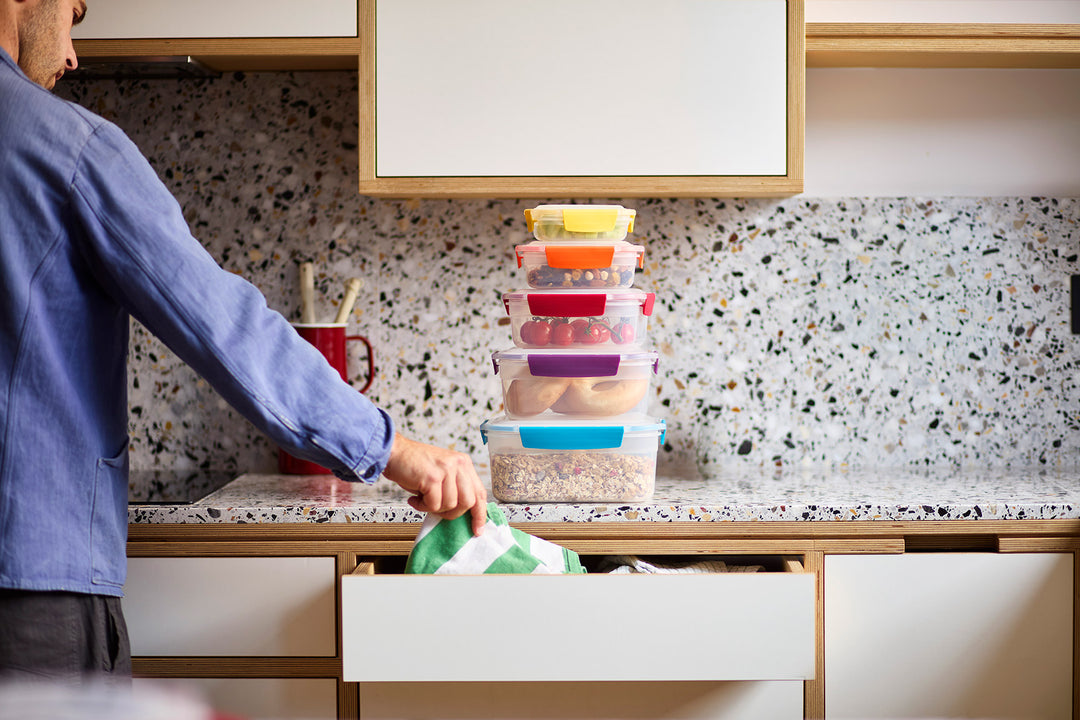
Joseph Joseph Nest Lock is one product example built around nesting bases and lids that clip together. Its color coding helps distinguish matching parts. That can simplify a mixed-size collection, but the useful question is whether the included capacities match your meals and the shelf or drawer where you will keep them.
Give lids a visible boundary
Store loose lids upright in a suitable divided bin or rack when their shapes allow it. Group by compatible family, then size, so the first lid you see is not merely the top of a tangled pile. Allow enough room to remove a lid without bending its seals or clips.
A small open box can be a budget alternative to a purpose-made organizer. Check that the lids remain upright when the drawer moves and that the tallest one clears the opening. Put the lid zone beside the matching bases; sending them to opposite cabinets creates a search each time you pack food.
Keep the daily sets together
For the containers you use constantly, storing a complete set can be worth the extra space. Place a few ready-to-grab pairs in a clear daily zone and nest the less frequently used pieces elsewhere. Test this before buying a larger organizer.
Measure the containers with their clips and handles in the position used for storage. Drawer dimensions alone are not enough: internal hardware, the cabinet opening and any rail above the drawer can reduce usable height. If glass containers are involved, avoid heavy, unstable stacks that are awkward to lift apart.
Make returning clean pieces straightforward
Put containers away clean and fully dry according to their care instructions. Check whether the base, lid and seal have different cleaning, heating or storage requirements. A storage system should keep those parts identifiable rather than encouraging you to interchange lids that only look similar.
Leave some empty space for pieces returning from the dishwasher while other containers are in use. If a drawer only works when every container is perfectly nested, it will be difficult to maintain. Start with the smallest collection that covers your routine, then add compatible pieces when a real gap appears.
Product reference
Joseph Joseph product page. Check current dimensions, compatibility and care or installation instructions for the selected model.
An adjustable rack for a mixed lid collection
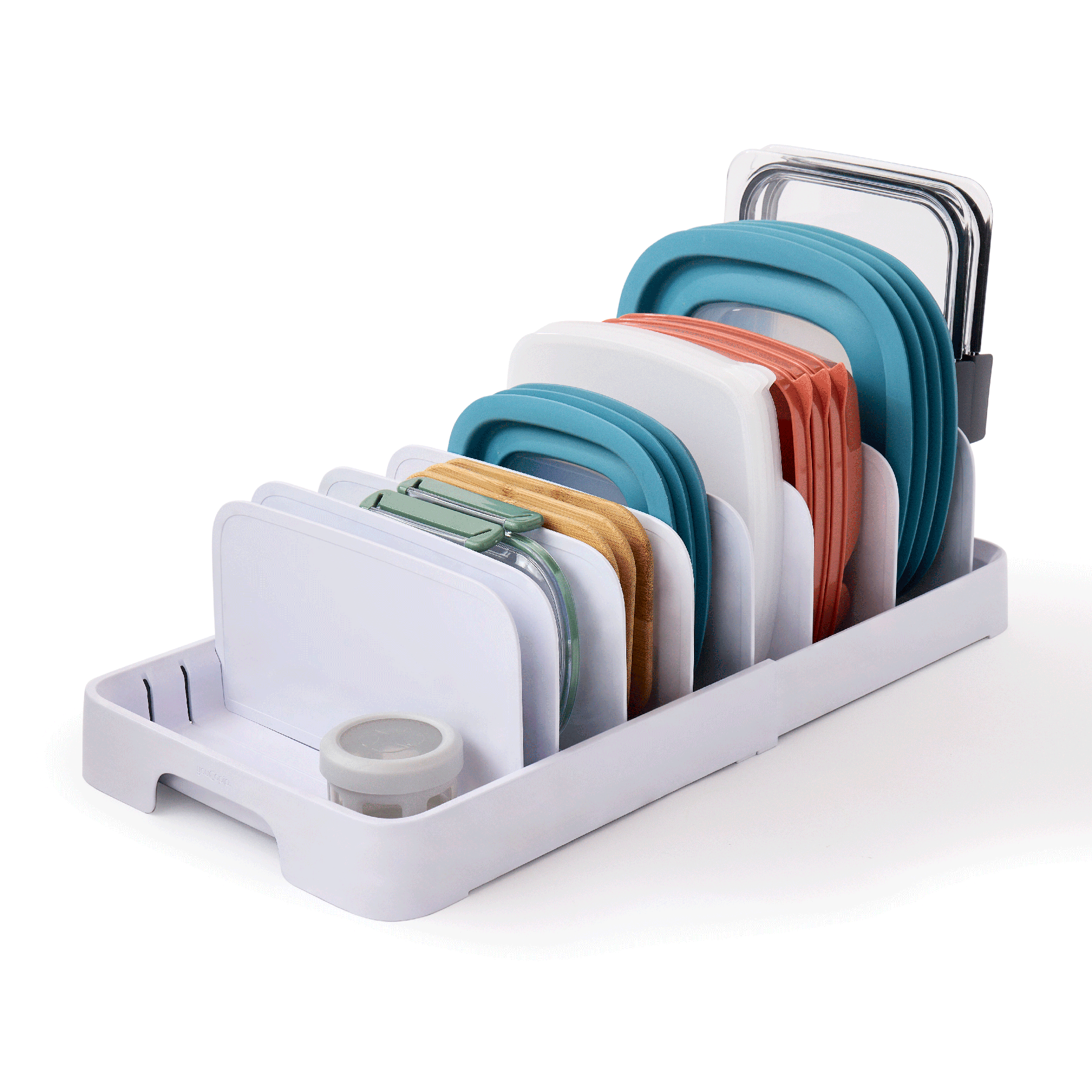
YouCopia StoraLid ↗ is an example of a removable lid organizer with an expanding base and movable dividers. The photographed 40-lid version has eight dividers; that name is a capacity description, not a promise that forty of your particular lids will fit. Group matching shapes and leave room to grasp them.
Unlike a matching container set, the rack does not require changing your food containers. Unlike a fitted drawer, it needs no cabinet mechanism. An existing narrow box with suitable dividers is the simpler comparison. Measure the tallest loaded lid and the space for the rack’s handles before buying; this organizer is hand-wash only.
The linked products are examples of different approaches. Similar solutions can be found from other manufacturers and stores. Compare the exact model, supplied components and installation requirements. Product photographs are credited to their source. This article describes functions and planning considerations, rather than a hands-on test.