
Compare fixed shelving, adjustable systems and cabinets around the loads and equipment you actually store.
Map the garage with the car in place
Measure storage space with vehicles parked and doors open. Include the route to the house, the garage-door mechanism and access to equipment that needs service. An empty garage photograph can make a shelving run seem practical when everyday use tells a different story.
List the largest and heaviest objects before selecting shelves. Long tools, bulky sports equipment and small parts need different storage. Group them by use so an ordinary task does not involve moving several unrelated items.
Compare metal, timber and complete systems
Metal shelving can offer a straightforward modular approach. Timber construction can be tailored, but shelf span, supports and connections need a suitable design. Closed cabinets conceal small supplies, while open shelves make larger objects easier to see.
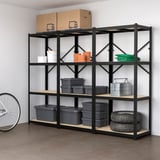
IKEA BROR is a manufacturer example of garage-oriented storage. Check the selected combination’s load ratings, restraint requirements and suitability for the environment. A rating for one shelf or configuration should not be applied to a different homemade arrangement.
Plan loaded access
Place heavy objects where they can be handled steadily without lifting them overhead. Leave space to grip a container rather than filling a shelf from edge to edge. Check whether an item can be removed while the neighboring shelves are fully stocked.
Use adjustable spacing around real containers. Extra shelves are not useful if they create openings too low for the equipment. Keep labels visible from the normal approach to the rack and avoid hiding essential items behind a second row.
Start with one working bay
Try one shelving section and review it after a few normal tasks. Notice what remains on the floor because returning it is awkward. Improve that return route before expanding the system.
Follow installation and anti-tip instructions and use suitable fixings for the supporting structure. Keep access to utilities and circulation routes clear. A useful garage shelf is part of the room’s working layout, not simply the maximum storage that fits against a wall.