
A headboard can replace some bedside furniture, but a shelf that looks compact can be awkward behind pillows. Start from where your hand reaches while you are actually in bed.
This review compares side-access storage, a shallow shelf and separate clamp-on accessories, with attention to charging, cleaning and replacement.
Start from the pillow position
Sit against the pillows and reach toward the proposed shelves. A convenient position while standing beside the bed may be difficult when lying down. Check both users if the bed is shared. Glasses, a book and a phone need enough surface to sit securely without being buried behind pillows or knocked off while changing the bedding.
A shelf above the mattress
A continuous shelf can hold a light and a few small objects, but it should not crowd the area where people sit up. Keep heavy or unstable objects out of a position where they could fall onto sleepers. A shallow, well-placed shelf may be more useful than a deeper one filled with decor. Check the permitted load and wall attachments for the actual construction.
Cables need a complete route
If charging is part of the plan, trace the cable from the wall outlet to the device. Keep connectors accessible and cables clear of sharp edges or moving bed parts. A cable opening does not turn a headboard into an electrical enclosure. Use equipment intended for the location and avoid pinching leads between the bed and wall when the frame moves.
Built-in or separate pieces?
A custom headboard can align shelves with the mattress and integrate a calm visual arrangement. Separate wall shelves and lamps can be easier to replace and may cost less. Compare how each option will be cleaned, repaired or moved when the bed changes. Upholstery also has different care needs from a wipeable surface, particularly beside frequently handled shelves.
Test the replacement function
Before removing the nightstands, list what they currently hold. If the new headboard has room only for a phone, you may still need a drawer elsewhere for small personal items. A multifunctional piece earns its place by replacing a real task, not just by offering more openings. Which bedside function would you most like the headboard to take over?
Add a small function before building a large headboard
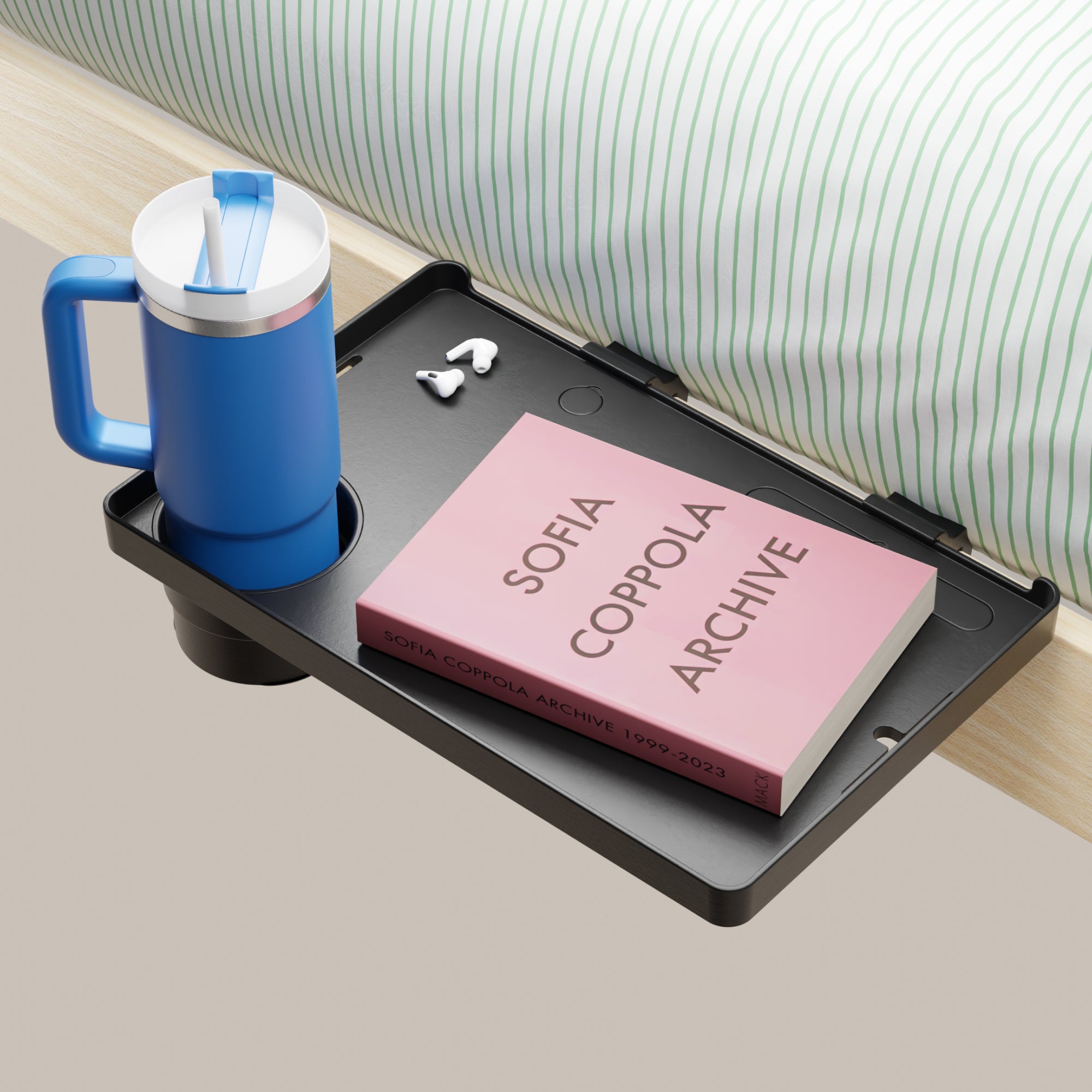
BedShelfie’s clamp-on bedside shelf ↗ illustrates attaching a small landing place to a compatible bed rail. Cable slots help retain charging leads, but the clamp geometry still needs to match the rail and surrounding slats. It is a useful comparison with a full headboard unit when only a phone, glasses and a book need a home.
A Glocusent headboard clip-on lamp ↗ separates reading light from the furniture. That makes replacement simpler than a permanently enclosed lamp, provided the clip and cable suit the headboard. A custom headboard can integrate both functions more neatly but adds joinery, wiring access and cleaning details. Judge the arrangement from the pillow position, not just from the doorway.
The linked products are examples of different approaches. Similar solutions can be found from other manufacturers and stores. Compare the exact model, supplied components and installation requirements. Product photographs are credited to their source. This article describes functions and planning considerations, rather than a hands-on test.