
Paper storage becomes difficult when everything is treated as equally current. A bill needing attention, a reference manual and an old record should not compete for the same tray. Organizing the stages of work can be more useful than adding another cabinet.
Give incoming paper a limited queue
Create one place for items that have not yet been processed. Keep its capacity small enough to remain visible and review it regularly. A tray is a temporary stage, not a promise that the contents are filed. Separate personal and shared paperwork when different people need to act on it.
Use trays for active work
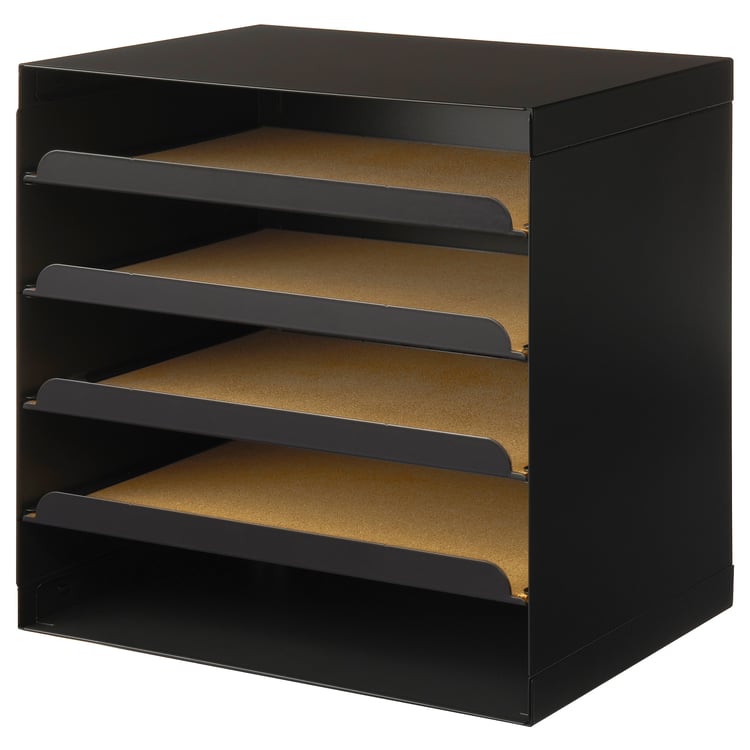
IKEA HARVMATTA is an example of a vertical letter-tray arrangement with pull-out compartments. Check the paper format and the space needed to extend a tray. The height may save surface area, but a unit beneath a low shelf still needs room for a hand and the documents being removed. Label by task or status in a way you will maintain.
Keep reference material distinct
Frequently consulted manuals or notebooks can use a nearby shelf, while completed records belong elsewhere. Avoid storing heavy folders on a decorative ledge without a suitable load rating. A vertical file needs enough support to prevent thin papers slumping. Retention requirements depend on the document and circumstances, so do not discard records merely to reduce visual clutter.
Small tools need simple groups
Pens, cables, headphones and spare supplies benefit from a few clear containers. A shallow drawer divider may be enough. Keep the current working set near the hand and move backups out of the prime area. Tiny individual compartments can make cleanup slower if every object needs a carefully chosen slot.
Digital and private information
Scanning can improve retrieval, but it needs clear names, a sensible folder structure and appropriate backup. A scan does not automatically replace an original for every purpose. Keep private paperwork out of shared sight and choose secure storage where needed. Do not use an open tray beside a visitor seat as the archive for sensitive records.
Close the workday with a return route
Put active documents into their defined stage and clear a useful area for tomorrow. If every tray is full, process or relocate its contents instead of adding another identical stack. Lower-cost boxes can work when correctly sized and labelled. What occupies your desk most: unfinished tasks, reference material or papers that should already have left it?
Sources and product information
Product information checked October 17, 2026. Check current documentation for the exact model, permitted installation, loads and compatibility. Product photos illustrate the named item; other arrangements discussed may require different products. Prices and availability vary by market.