
Use shallow cupboards and small visible groups while preserving the space needed for washing, cleaning and movement.
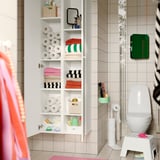
Keep the working space clear
A small bathroom can gain storage and lose usability at the same time. Start by marking the space needed at the basin, toilet and shower entrance. Include doors, drawers and the movement of the people who use the room. Do not treat an empty wall as automatically available for a cabinet.
List what must remain in the bathroom. Daily toiletries, spare paper and occasional supplies need different positions. Store bulky refills elsewhere when that preserves a useful clear area. Reduce duplicate products before planning more furniture.
Choose shallow storage by its contents
A shallow cupboard keeps small items near the front, but it may not accept the bottles you already use. Measure the largest container, shelf depth and door opening. Check handles and hinges as well as the nominal cabinet dimensions.
IKEA ENHET provides a manufacturer example of a narrow high cabinet. Follow the selected model’s fixing and bathroom-use instructions. Tall furniture requires the prescribed restraint or wall attachment; a small footprint does not make a cabinet safe to leave unsecured.
Use height without making access difficult
Place daily items within comfortable reach and reserve less convenient shelves for light occasional supplies. Avoid overhead stacks that can fall when one item is removed. A removable small basket can group products, provided it can be grasped and returned easily.
Open shelving is quick to access but exposes contents to the room. Closed storage reduces visual clutter but still needs cleaning and appropriate moisture conditions. Neither arrangement makes an unsuitable furniture material waterproof.
Plan cleaning and service access
Leave room to clean around the furniture and reach valves or other services. Check that a drawer does not collide with plumbing or a nearby fitting. Coordinate anything near wet areas with the relevant installation guidance.
Try one small organizer before filling the room with matching pieces. The useful improvement is storage that stays easy to use and clean while the bathroom still feels navigable.