
Space under a bed is useful only if you can reach it when the room is normally furnished. A large box that cannot pass the bedside table is storage in theory.
We compare low removable containers, bed drawers and lift-up platforms, considering the frequency of access and the effort needed to put things away.
Measure the opening route
For side drawers, measure the space needed to open them and stand beside them. Include the nightstand, radiator, door swing and rug edges. The mattress size does not tell you the bed’s full footprint. Draw the frame and extended storage on the floor with removable markers or paper so the room can be assessed in its working state.
Separate boxes for an existing bed
Low removable boxes can improve a bed you already own. Measure the lowest obstruction beneath the frame and check whether legs or center supports interrupt the route. Lids help contain dust but must remain practical to remove. Wheeled boxes need a suitable floor and clearance; soft bags may fit more awkward spaces but offer less protection against crushing.
Lift-up storage has different demands
A lifting mattress platform can expose a large compartment without requiring side-drawer travel. It still needs clearance above and around the bed, and operation must suit the user. The mechanism, mattress weight and assembly must match the manufacturer’s requirements. Do not add arbitrary gas struts or change the mattress beyond specified limits. This is a complete bed-system decision, not simply an alternative box.
Keep daily items beside the bed
Items needed every night belong within comfortable reach rather than under a large platform. A small bedside shelf may release space needed by drawers. Keep cables out of moving parts and allow access for cleaning. Store only clean, dry textiles below the mattress, and follow the bed and mattress instructions for ventilation; filling every void can undermine the intended arrangement.
Choose the opening movement before the capacity
Rockler’s platform-bed lift mechanisms ↗ illustrate opening the mattress platform to reach a storage cavity. This is furniture hardware that must match the bed construction and supported weight, rather than a universal strut to attach to an ordinary bed. It offers access from above but requires a suitable lifting routine.
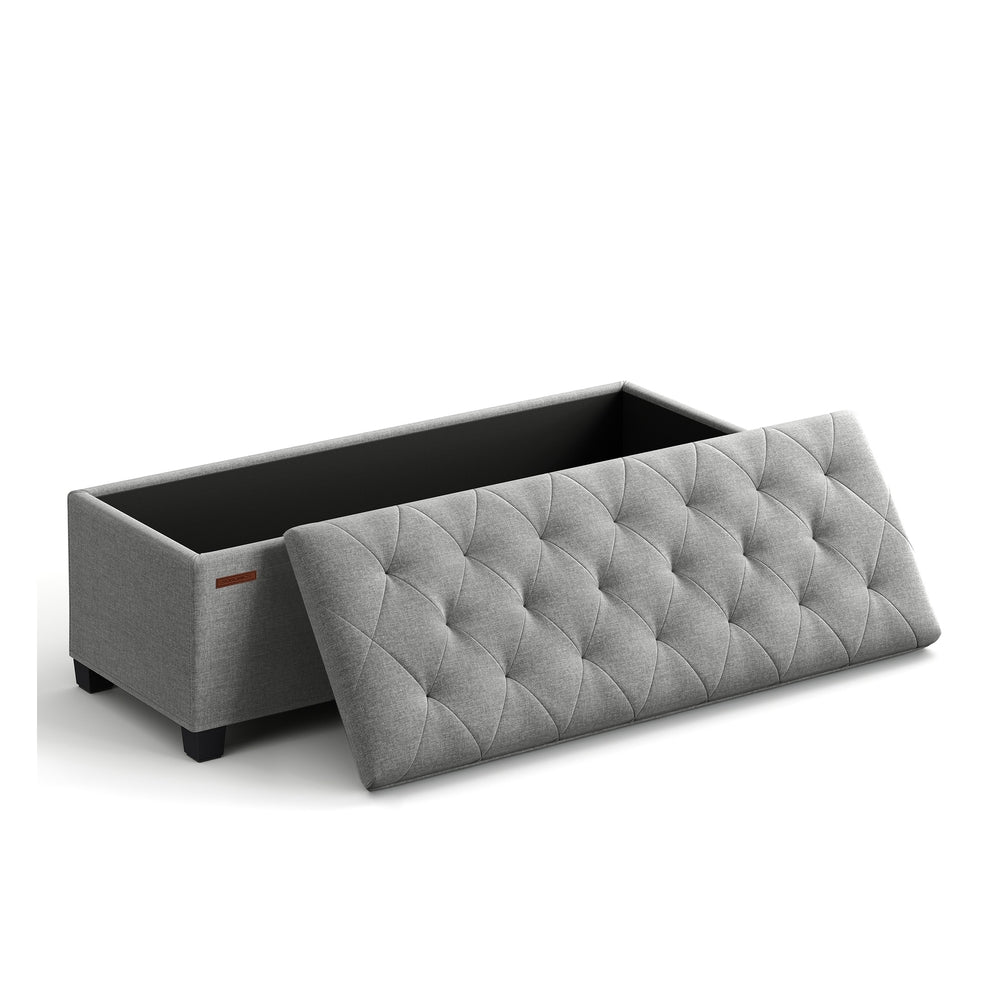
A low lidded box or rolling container is the simpler retrofit. Measure the loaded box, wheels and lid against the lowest obstruction and the route out. A storage ottoman ↗ can hold spare textiles elsewhere if under-bed access is blocked, but takes floor space of its own. Compare usable storage and daily handling before choosing a fitted lifting system.
Choose what deserves the space
Under-bed storage suits things used less often, provided retrieval remains manageable. Frequently needed clothes should not require moving a heavy nightstand each morning. Compare a few correctly sized containers with replacing the entire bed before committing. Would drawers, separate boxes or a lifting platform actually be easiest in your bedroom?
The linked products are examples of different approaches. Similar solutions can be found from other manufacturers and stores. Compare the exact model, supplied components and installation requirements. Product photographs are credited to their source. This article describes functions and planning considerations, rather than a hands-on test.